
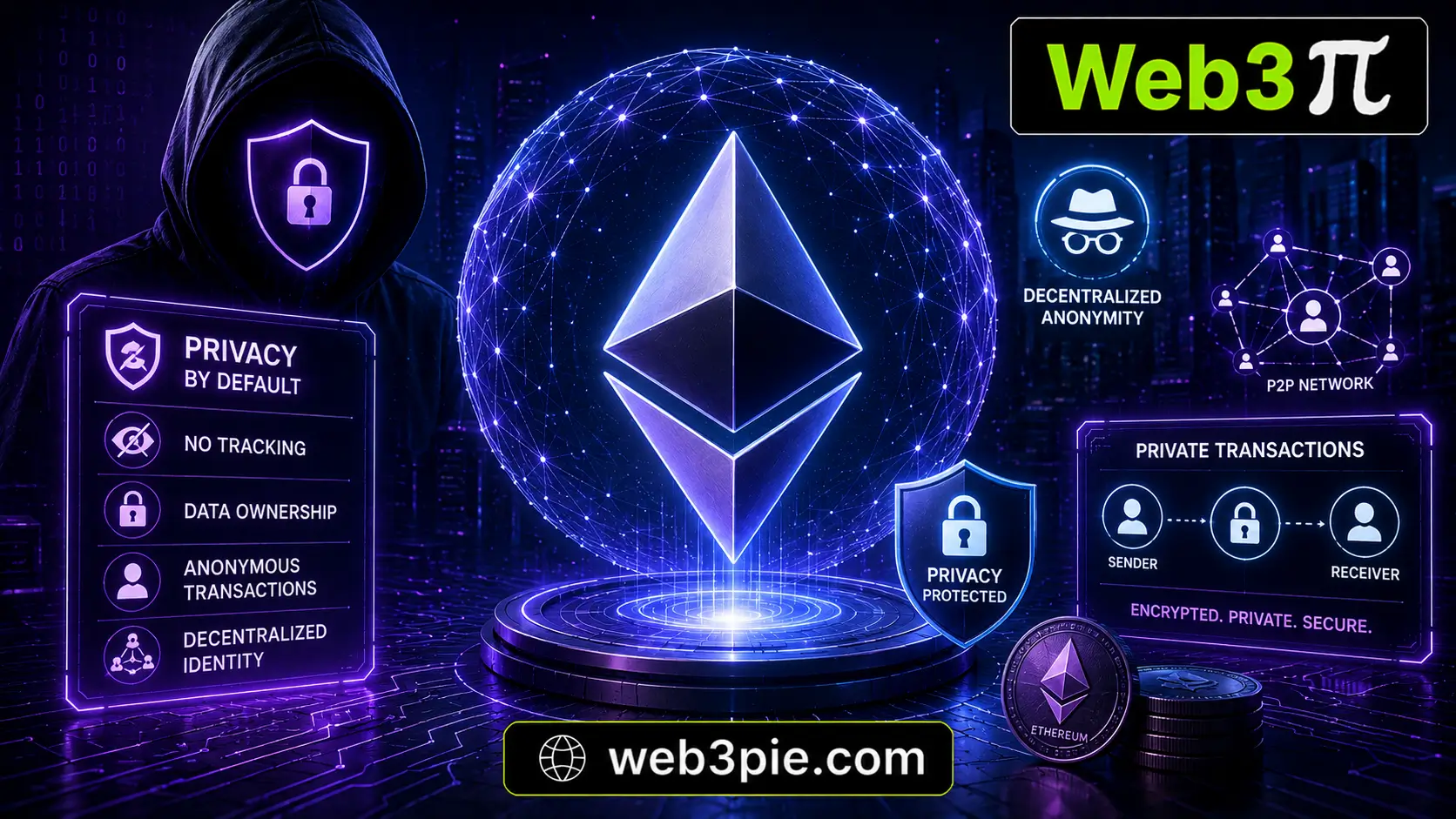
Welcome back to The Protocol Newsletter! This week, we’re shining a spotlight on a topic that’s becoming increasingly critical in the world of decentralized finance and Web3: privacy within the Ethereum ecosystem. As Ethereum continues its rapid evolution, the need for robust, user-centric privacy solutions is more pressing than ever. Join us as we explore the current landscape, emerging technologies, and what the future holds for keeping your transactions and identity private on the world’s leading smart contract platform.
Why Ethereum Privacy is Paramount in a Transparent World
While the transparent nature of blockchain offers unparalleled audibility and trustlessness, it also presents unique privacy challenges. Every transaction on the Ethereum mainnet is publicly visible, linking addresses to activity. For institutions, businesses, and even individual users, this level of transparency can be problematic, revealing sensitive financial data, trading strategies, or personal spending habits. Understanding why privacy isn’t just a ‘nice-to-have’ but a fundamental requirement for mainstream adoption is the first step towards a more inclusive and secure decentralized future.
Current Privacy Solutions: Mixers, ZK-Rollups, and More
The Ethereum community hasn’t been idle in addressing these concerns. Over the years, various solutions have emerged, each with its own approach to enhancing anonymity. Transaction mixers like Tornado Cash (though now sanctioned) pioneered coin mixing, breaking the link between sender and receiver. More recently, zero-knowledge proofs (ZKPs), particularly in the form of ZK-Rollups and ZK-EVMs, are revolutionizing privacy by allowing transactions to be verified without revealing underlying data. Projects like Aztec Network, Scroll, and zkSync are at the forefront, leveraging these cryptographic breakthroughs to build private computation layers and scale solutions.
The Rise of Private Transactions and Identity Management
Beyond just hiding transaction amounts, the next frontier for Ethereum privacy involves private smart contract interactions and decentralized identity management. Protocols exploring fully homomorphic encryption (FHE) or secure multi-party computation (MPC) aim to enable computations on encrypted data, opening doors for truly private DeFi applications. Simultaneously, decentralized identity (DID) solutions coupled with verifiable credentials (VCs) are evolving to give users more control over their personal data, allowing selective disclosure without oversharing. This convergence promises a future where users can prove attributes without revealing their full identity.
Navigating Regulatory Challenges and Usability Trade-offs
The pursuit of privacy on Ethereum is not without its hurdles. Regulators worldwide are grappling with the implications of truly anonymous transactions, often raising concerns about money laundering and illicit financing. Balancing user privacy with compliance requirements is a delicate dance. Furthermore, current privacy solutions can sometimes introduce complexities in user experience or higher transaction fees. Developers are continuously working to make privacy tools more intuitive, affordable, and seamless, ensuring that enhanced security doesn’t come at the cost of accessibility.
What’s Next? The Interoperable and Private Ethereum Ecosystem
Looking ahead, the future of privacy on Ethereum is likely to be characterized by interoperability and a multi-layered approach. We can expect more sophisticated ZKP implementations, wider adoption of private DeFi primitives, and cross-chain privacy solutions that extend beyond a single network. The integration of privacy-preserving technologies directly into core Ethereum protocols, coupled with advancements in hardware-level security, will further solidify the platform’s commitment to user data protection. The ongoing research and development in areas like confidential computing and state channels will continue to shape an ecosystem where privacy is a default, not an afterthought.
The journey towards a fully private Ethereum ecosystem is an ongoing one, filled with innovation and complex challenges. From the foundational principles of blockchain transparency to the cutting-edge cryptography of zero-knowledge proofs, the community is relentlessly pushing the boundaries of what’s possible. As we move forward, The Protocol Newsletter will continue to monitor these developments, ensuring you stay informed on how privacy is evolving to empower users in the decentralized future.
FAQs
Q1: Why is privacy an issue on Ethereum?
A1: Ethereum’s public ledger makes all transactions visible, linking activities to wallet addresses, which can reveal sensitive financial data.
Q2: What are ZKPs in Ethereum privacy?
A2: Zero-knowledge proofs (ZKPs) allow verification of transactions or data without revealing the actual information, crucial for private computation.
Q3: Are privacy solutions on Ethereum legal?
A3: The legality of privacy tools varies; while ZKPs are generally accepted, certain mixers have faced sanctions due to misuse concerns.
Q4: How do private transactions benefit users?
A4: They protect financial confidentiality, hide trading strategies, and enhance personal data security in the decentralized space.
Q5: What’s the biggest challenge for Ethereum privacy?
A5: Balancing robust privacy with regulatory compliance and ensuring user-friendly, affordable implementation.

Elara Winter
I'm Elara Winter, a dedicated freelancer with a passion for the gaming industry. I specialize in delivering tailored marketing, advertising, and press release services for iGaming,
Related coverage

BitMEX Acquisition Collapse: Founder Ownership & Shrinking Business Drove Buyers Away
The cryptocurrency exchange landscape is highly competitive, and even established players face intense scrutiny. Recent reports reveal that potential buyers, including the…

Beyond Speed Wars: Ethereum’s Strength in Empowering Layer 2 Networks
In the fast-paced world of blockchain, the race for speed and low transaction fees often dominates headlines. New "Ethereum killers" emerge regularly,…

Crypto Platform’s Strategic Pivot: Layoffs Fuel Enterprise Growth Ambitions
The dynamic world of cryptocurrency is no stranger to rapid evolution, and a recent announcement from a prominent crypto trading platform underscores…